

A refinancing wall, a thinning pipeline and a cooling micro-market have opened a window in the world's deepest property market. The case — and where it points.
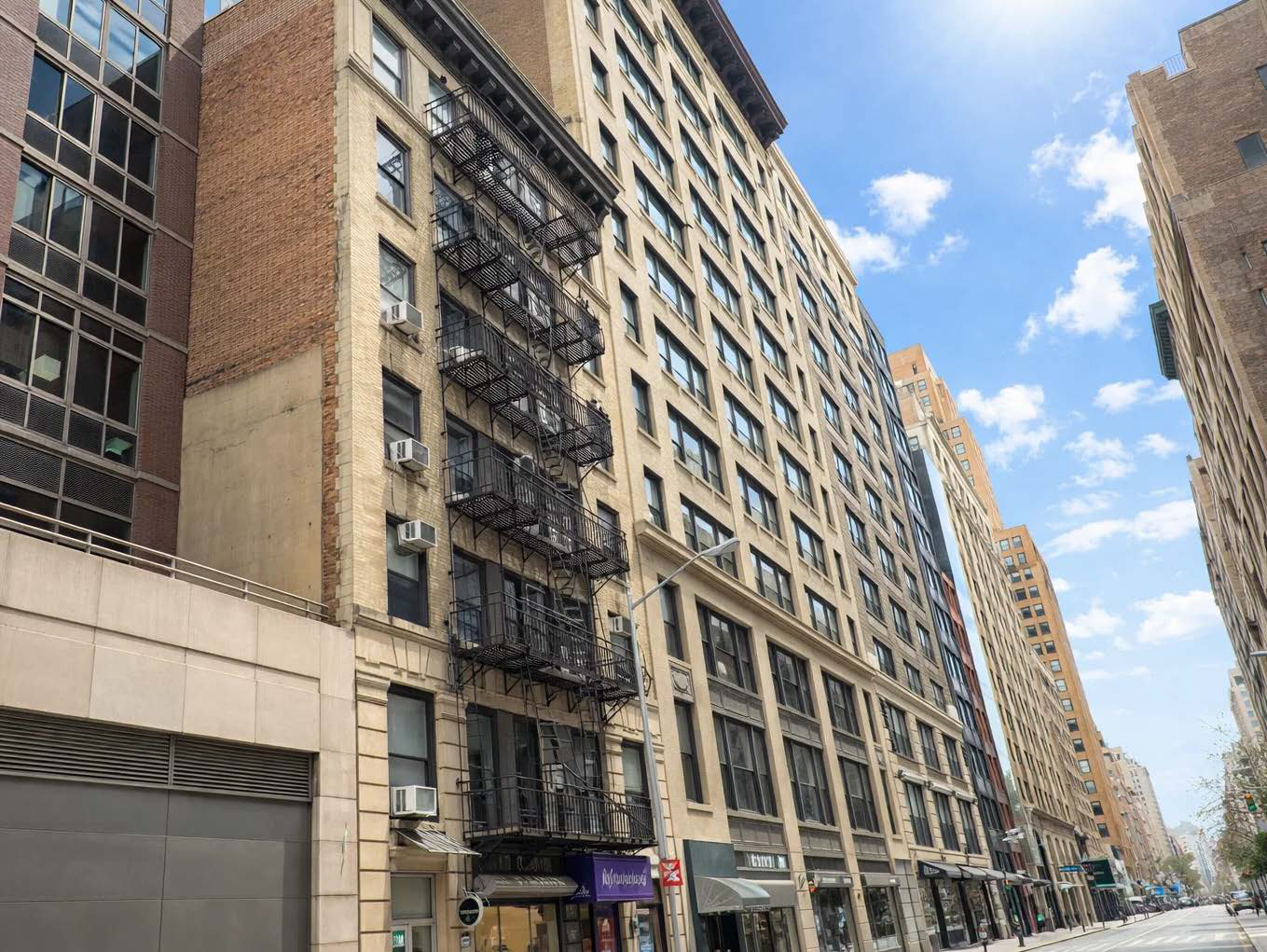
New York remains the deepest, most liquid real estate market in the world — and the argument for owning it has not changed.
The case for Manhattan still rests on scarcity
Supply is structurally constrained and demand is global. Q1 2026 made the point plainly. Active Manhattan inventory fell to just over 6,000 units — a five-year low for a first quarter — while only 81 new development units launched, roughly 75% below the ten-year average (Corcoran, 1Q 2026). Closings rose for the sixth consecutive quarter and total sales volume reached US$6.2 billion, one of the strongest first quarters in nearly a decade.
The median sale price climbed to about US$1.28 million, up 9% year over year — driven less by broad acceleration than by a thinning pipeline and concentrated demand at the upper end, where transactions above US$3 million rose 10%. The signal is simple: you cannot build your way into this market quickly, and the people who want to own it are not going away.
There is a second, quieter signal in who is transacting. All-cash purchases accounted for 64% of Manhattan sales in 2025, and nearly 90% of deals above US$3 million (CooperatorNews, March 2026). In a market where mortgage-dependent buyers are priced out by carrying costs, capital itself has become the entry ticket — precisely the environment in which a well-funded acquisition can move decisively while others hesitate.
Chelsea: a micro-market with its own logic
Chelsea sits at the centre of this story. The neighbourhood pairs the High Line, the gallery district and proximity to Hudson Yards with a building stock — converted lofts, mixed-use walk-ups — that cannot be replicated at today's construction costs. The median condo value held around US$2.2 million in early 2026, a slight dip from 2024's highs (Decode NYC, Q1 2026).
Crucially, Chelsea has cooled in a healthy way. Median condo pricing slipped about 10% year over year and closings fell roughly 13%, with average days-on-market near 110. That is not weakness — it is the return of negotiating room. Fewer bidding wars, more disciplined pricing, and motivated sellers create exactly the conditions in which patient, well-capitalised buyers acquire quality assets below replacement cost.
This is the return of negotiating room — not weakness.
What underpins Chelsea's durability is the breadth of its demand base — creative professionals, finance executives drawn to Hudson Yards, and international investors who treat the architecture as a store of value. That diversity is why Chelsea has historically rebounded faster than narrower submarkets after each cycle: when one source of demand pauses, another tends to step in. For an income-focused investor, the relevant point is not speculative appreciation but the depth of the rental and resale market beneath the asset.

A refinancing wall meets a repricing
The reason this window is open has little to do with sentiment and everything to do with debt. Well over US$1.5 trillion of US commercial real estate debt will have reached maturity by the end of 2026, with some estimates as high as US$1.8 trillion — one of the largest refinancing waves on record (MMG Real Estate Advisors, November 2025). Owners who locked financing at 3–4% in the mid-2010s now face refinance rates that can be nearly double, while values in some markets have softened. The Fed's two 25-basis-point cuts in late 2025 helped at the margin but did not close that gap.
For two years, the standard response was "extend and pretend" — lenders modifying or rolling loans to defer the reckoning. Much of that deferred debt is now crowding into the 2026 window, which is why the pressure is concentrating rather than dissipating. Owners who waited for deeper rate cuts that did not arrive are running out of runway.
The result is a growing pool of motivated sellers — owners who must transact rather than wait. For a buyer with committed capital, higher interest costs translate directly into lower entry prices and weaker competition. This is the institutional logic of buying into a dislocation: acquire quality stock from forced timing, not distressed quality. The opportunity here is a sound asset changing hands because its owner's debt matured at the wrong moment — not a troubled building sold at a discount for a reason.
The loft opportunity — and the line that matters
New York's loft buildings carry a specific risk that every serious investor must understand. Under the state's Loft Law (Multiple Dwelling Law Article 7-C, enacted 1982), former commercial and manufacturing spaces used as residences become Interim Multiple Dwellings, where the Loft Board governs conversion and rents, and units typically transition into rent stabilisation after legalisation. The framework has been progressively strengthened: in December 2021, Governor Hochul signed a law giving loft tenants the right to pursue essential-services and habitability claims in housing court (NY Governor's Office, December 2021).
The regulatory direction has since hardened further. In February 2026, Mayor Zohran Mamdani appointed six new members to the Rent Guidelines Board, which sets adjustments for roughly one million rent-stabilised apartments, lofts and SRO units (NYC Mayor's Office, February 2026). Reporting indicates the new administration has signalled support for rent freezes on stabilised units, with a freeze on the table for the board's coming vote (THE CITY, May 2026).
For investors, the lesson is that regulated and IMD-status loft stock carries real political and rent-control risk in the current environment. An asset whose rents are capped by a board pledged to freeze them is, by definition, an asset whose income cannot keep pace with costs. The opportunity lies in loft product that sits outside that framework — buildings whose income is market-rate and unencumbered by IMD designation or stabilisation, where a repositioning thesis can actually be executed. That single distinction separates a defensible income play from a regulated liability.
How this applies in practice
This is precisely the structure behind 110 West 26th Street, the Chelsea loft repositioning now open to Bricksave investors. The building is being acquired at roughly US$417 per square foot — well below the estimated US$1,000–1,200 to build comparable product new — from a motivated seller, with a leading institutional family office already anchoring the equity raise at US$2 million and senior debt confirmed (Bricksave Capital Investment Deck, May 2026). Its 14 units are under-rented relative to renovated lofts nearby, the building is around 92% occupied, and a phased light renovation is designed to close the rent gap while income keeps flowing. The base case targets a 21.3% net IRR and a 1.8× equity multiple over a three-year hold, behind an 11% preferred return — projections, not guarantees.
The thesis ties the threads together. Scarcity supports the exit; the refinancing wall explains the entry price; and a market-rate income profile means the repositioning is not throttled by rent regulation. Bricksave's fractional model lets investors co-invest alongside the anchor from US$250,000, with all tax, compliance and property management handled on their behalf. It is institutional access to a Manhattan repricing, without the institutional cheque.
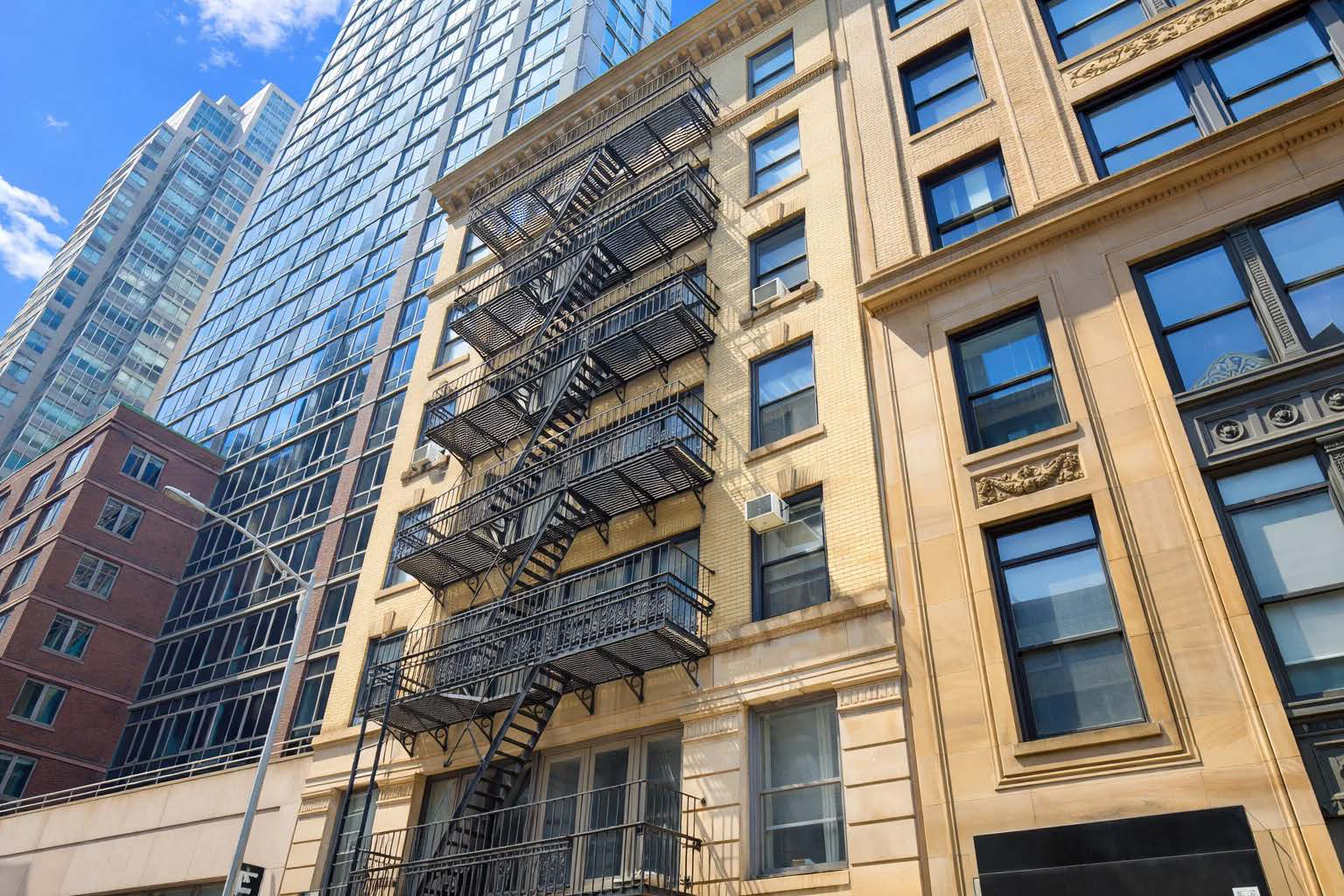
110 West 26th Street
Chelsea, Manhattan · Loft repositioning · 3-year hold
*Targets derived from the Bricksave Capital Investment Deck (May 2026, v4). Projections, not guarantees. Capital is at risk.
Read this before you act on the thesis
Returns depend on executing the renovation on budget, re-letting units at projected rents, and exiting into a market whose conditions cannot be guaranteed. Real estate is illiquid, projections are not promises, and capital is at risk. Investors should weigh the thesis against their own horizon and conduct independent due diligence.
Sources
- Corcoran, Manhattan Real Estate Market Report: 1Q 2026 (2 April 2026)
- Decode NYC, Chelsea Manhattan Real Estate Market Report: Q1 2026
- CooperatorNews, Manhattan Residential Snapshot: It's an All-Cash World (March 2026)
- MMG Real Estate Advisors, The 2026 CRE Refinancing Wall (November 2025)
- NY Governor's Office, Protections for Loft Residents (7 December 2021)
- NYC Mayor's Office, Six Appointees to the Rent Guidelines Board (18 February 2026)
- THE CITY, Rent Freeze No Sure Thing (7 May 2026)
- Bricksave Capital Investment Deck, May 2026 (v4)