By Felipe Chaparro | Bricksave
May 20, 2026
News > Blog Article > What staying home cost Latin American …
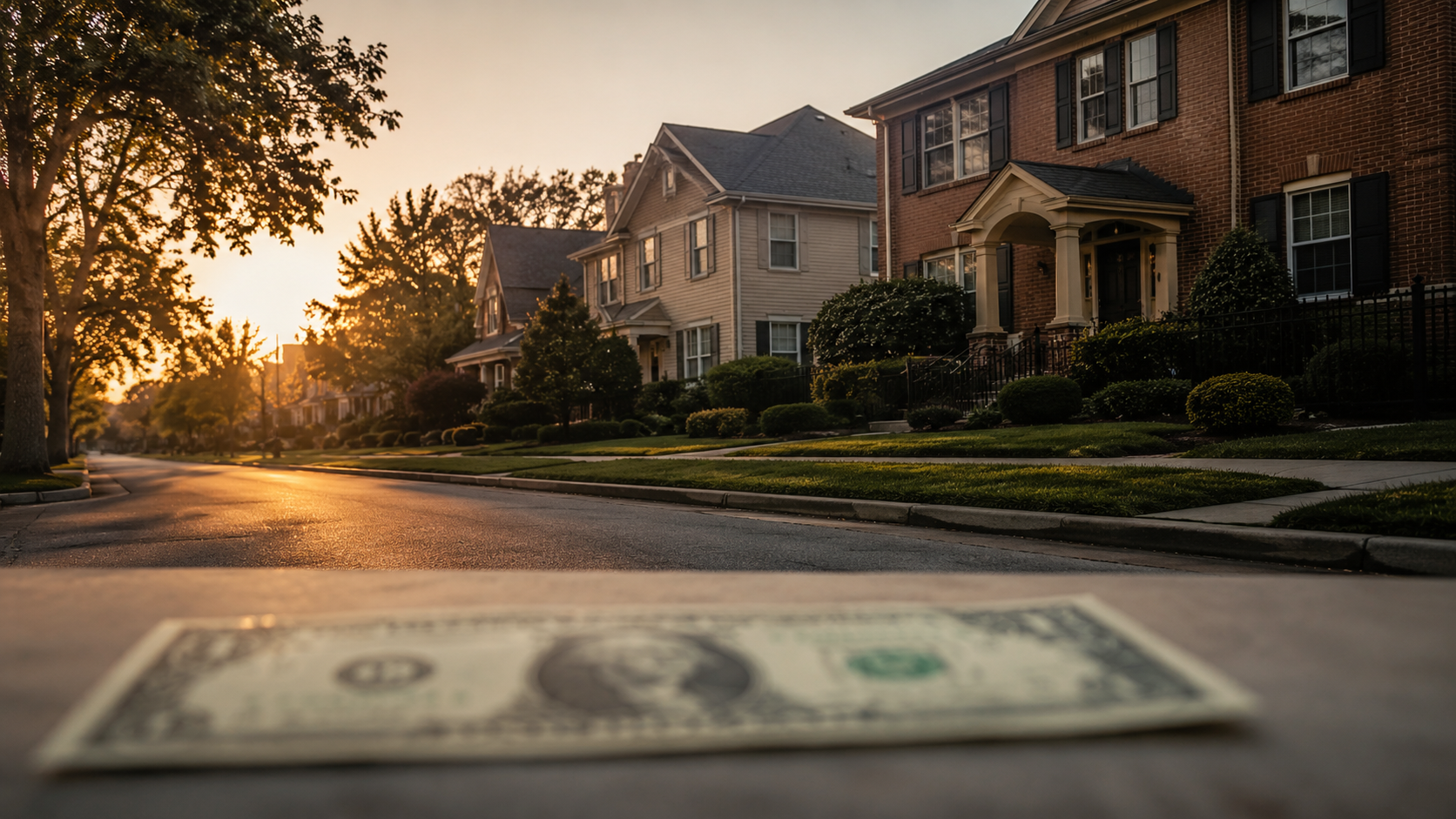
For investors across the region, local property feels familiar and safe. When measured in US dollars over the past five years, the picture is often more complicated than it first appears.
Experience real estate made easy.
Between Q1 2020 and Q1 2025, US residential property values rose 54.9% nationally, according to the Federal Housing Finance Agency (FHFA/NAHB, June 2025). Over the same period, Bricksave's portfolio of US residential properties returned an average net rental yield of 8.20% per year, paid in US dollars (Bricksave Investor Focus, Q4 2024). For Latin American investors who kept capital in local real estate instead, those numbers provide useful context for what they were competing against — often without realising it.
Argentina provides the starkest illustration of currency risk in the region.
In May 2020, one US dollar cost approximately 67 Argentine pesos (X-Rates, May 2020). By April 2026, the same dollar cost approximately 1,382 pesos (TheGlobalEconomy, April 2026). That represents a depreciation of more than 95% of the peso's US dollar value in six years.
For an Argentine investor whose property held its value in peso terms — even tripled — the dollar-equivalent outcome was deeply negative. A property worth $100,000 in US dollar terms in 2020 would have needed to increase more than twentyfold in peso terms simply to retain its dollar value. Most did not come close. Capital controls during much of this period added a further layer of difficulty, constraining access to the official exchange rate and meaning the real effective loss for many investors was worse than the headline figure suggests.
President Milei's economic reforms have stabilised the peso in the short term. But the underlying question — whether peso-denominated property adequately preserves dollar wealth over a multi-year horizon — has not been answered.
Brazil's story is less extreme than Argentina's but no less instructive.
The Brazilian real reached R$6.18 per dollar in January 2025 — its weakest level in years (Statista/Oanda, January 2025). By May 2026, it had recovered to approximately R$4.89 (TradingEconomics, May 2026). That swing of more than 20% in 16 months captures something that static property valuations rarely show: the currency exposure embedded in local real estate is not a background risk. It is a live variable that can move sharply and unpredictably.
A Brazilian investor whose property was fully financed in reais would have seen its dollar value compressed significantly during that period of BRL weakness — and then partially restored. For investors who needed to sell, access liquidity, or simply think in dollar terms, the round-trip was neither smooth nor predictable.
On the income side, Bricksave's Chicago properties have generated net rental yields in the region of 8% annually. Compounded over five years, the difference between a modest local yield and an 8% dollar-denominated return is material:
Colombia's currency tells a slower but directional story. Over the past decade, the peso has declined approximately 20% against the US dollar (Exchange-Rates.org, May 2026). Political volatility under the Petro government (2022–2026) added a risk premium that rarely appears in headline property yield figures but that informed investors account for.
When currency erosion runs at a long-term average of around 2% per year, local real estate yields must work significantly harder simply to deliver a flat dollar return. For investors comparing Colombian residential property to a dollar-denominated US alternative, that baseline drag is a real cost of staying home.
Bricksave's portfolio reflects two distinct return profiles. Higher-yield markets such as Chicago target net rental returns of 8.5% annually. Appreciation-led markets such as Miami and New York carry lower headline yields — the Hancock Street property in Brooklyn was listed at 4.88% net annual rental return — but are positioned in markets with a long history of capital growth.
All returns are US dollar-denominated, with no currency translation risk on the investment side. The 54.9% in national US home price appreciation between Q1 2020 and Q1 2025 is the backdrop against which local-currency alternatives have been competing.
This is not an argument that local investment is always the wrong choice. US real estate carries its own risks: market fluctuations, vacancy, and the illiquidity inherent in real property. Those risks deserve clear-eyed assessment.
But for investors in Argentina, Brazil, Colombia, Uruguay, and across Latin America, the true cost of keeping capital local — measured in US dollars, accounting for currency exposure, yield differentials, and concentration in a single market — is rarely as low as it appears on paper.
The numbers above do not make that case rhetorically. They make it arithmetically.
This article is for informational purposes only and does not constitute investment advice. Investing carries risk, including the possible loss of capital. Past performance is not indicative of future results.
Create your free Bricksave account and start browsing US residential properties with verified yield data, full documentation, and USD-denominated returns.
Experience real estate made easy.
Investing carries risks, including loss of capital and illiquidity. Please read our Risk Warning before investing.