By Alice Dunn | Bricksave
September 24, 2026
News > Blog Article > How each generation invests with Bricksave

What our investor data shows about age, amounts and where investors come from.
Articles about generational investing tend to recycle the same assumptions. Boomers buy houses, millennials rent, and Gen Z does everything on a phone.
Articles about generational investing tend to recycle the same assumptions. Boomers buy houses, millennials rent, and Gen Z does everything on a phone.
We wanted to know what our own investors actually do, so we grouped every Bricksave investor with a verified date of birth by generation. Bricksave investors have committed $67 million to property to date.
This is how the money and the investors split by age (Bricksave investor records, September 2026).
| Generation | Share of investors | Share of money invested | Typical (median) investment |
|---|---|---|---|
| Gen X (born 1965–1980) | 41.7% | 51.1% | $14,985 |
| Millennials (1981–1996) | 41.2% | 19.9% | $4,638 |
| Baby Boomers (1946–1964) | 9.5% | 20.4% | $25,009 |
| Gen Z (1997 onwards) | 4.6% | 1.6% | $2,723 |
Source: Bricksave investor records, September 2026.
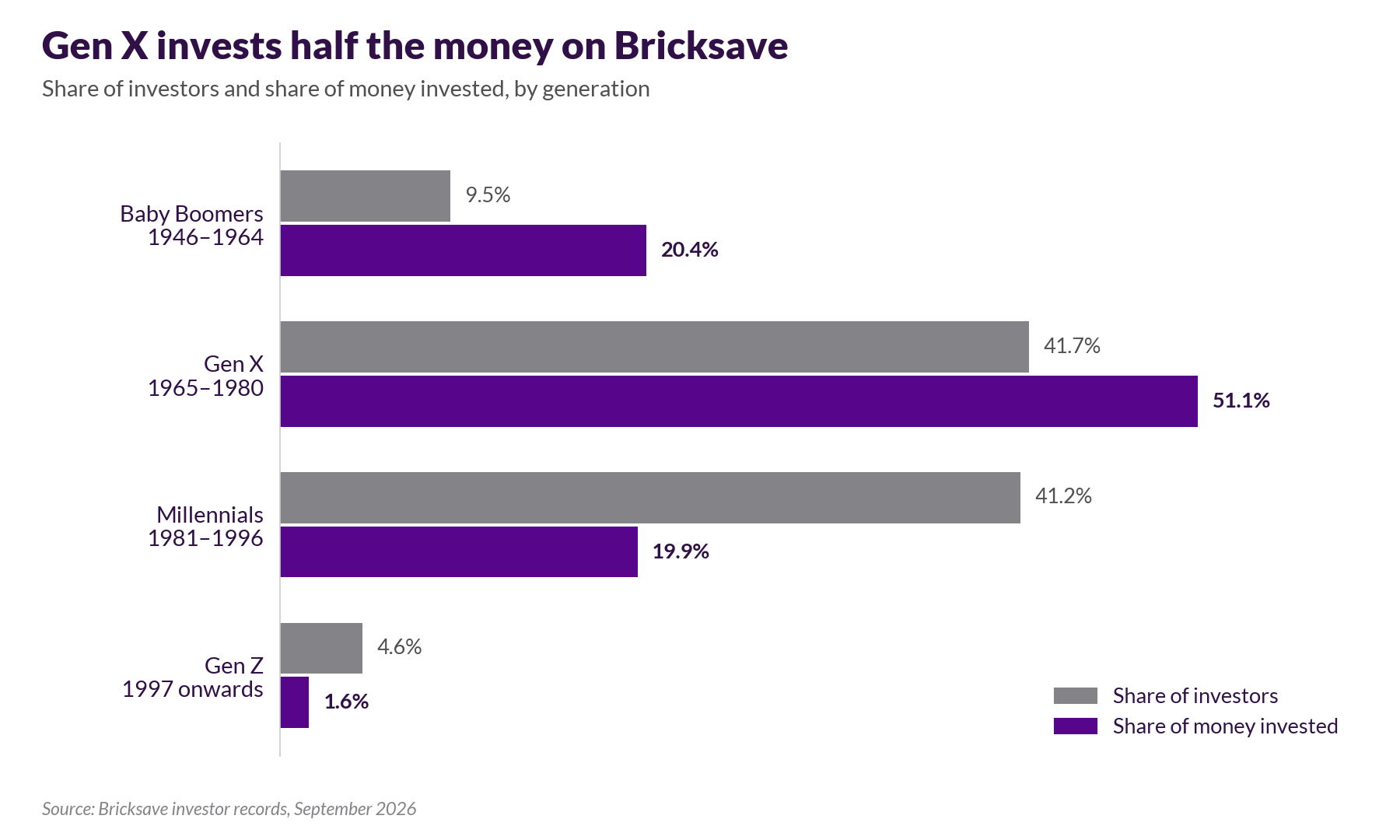
Gen X investors are now aged 46 to 61. There are almost exactly as many of them on the platform as millennials, but they have invested more than two and a half times as much money. The typical Gen X investor has committed $14,985, more than three times the millennial figure.
This is also the most Argentine of the large groups: 62.3% invest from Argentina, 9.8% from Colombia and 7.5% from Uruguay.
“Gen X investors are at the stage where income is highest and the priorities are clear: protect savings in dollars and build an income that doesn't depend on a salary. That's why they make up half of the money on our platform.”
Tom de Lucy, CEO, Bricksave
Millennials make up 41.2% of our investors and 19.9% of the money invested. The typical millennial has committed $4,638.
They are also the most geographically spread of the larger groups. Argentina accounts for 39.7% of millennial investors, Colombia for 17.1% and Uruguay for 11.5%. Their figures point to investors who start with smaller amounts and come from a much wider range of countries than their parents' generation.
Boomers make up only 9.5% of our investors but 20.4% of the money invested. Their typical investment of $25,009 is the highest of any generation.
This group is overwhelmingly Argentine: 77% invest from Argentina, and a further 8% from the United States.
“Many of our older Argentine investors have lived through several currency crises. For them, a dollar-denominated property abroad isn't a new idea. It's a habit, and they commit to it with conviction.”
Tom de Lucy, CEO, Bricksave
Gen Z is the smallest group on the platform, so these figures come from a much smaller set of investors and should be read with that in mind. Gen Z accounts for 4.6% of our investors and 1.6% of the money invested, and the typical Gen Z investment is $2,723.
The country mix is already the most varied of any generation. 39.6% invest from Argentina, and 20.8% invest from Colombia, the highest Colombian share of any age group.
Two patterns hold across all four generations.
$25,009 for Boomers, $14,985 for Gen X, $4,638 for millennials and $2,723 for Gen Z.
Argentina's share falls from 77% of Boomers to 39.6% of Gen Z, while Colombia's rises from 6% to 20.8%.
“Fractional ownership has changed who can invest in property. A 25-year-old in Bogotá and a 65-year-old in Buenos Aires can own a share of the same building. They just enter at different amounts.”
Tom de Lucy, CEO, Bricksave
Our data shows no single right amount or age to start. Bricksave investments begin at $1,000, which lets you enter at a level that suits your budget and add to your holdings over time.
Figures are based on Bricksave investors with a verified date of birth, as of September 2026. Shares of money invested and median figures refer to completed investments by those investors. The median is the middle value, so it is less distorted by a small number of very large investments than an average. Generation definitions follow Pew Research Center (Pew Research Center, January 2019). Pew's Gen Z runs from 1997 to 2012; all investors included here are aged 18 or over.
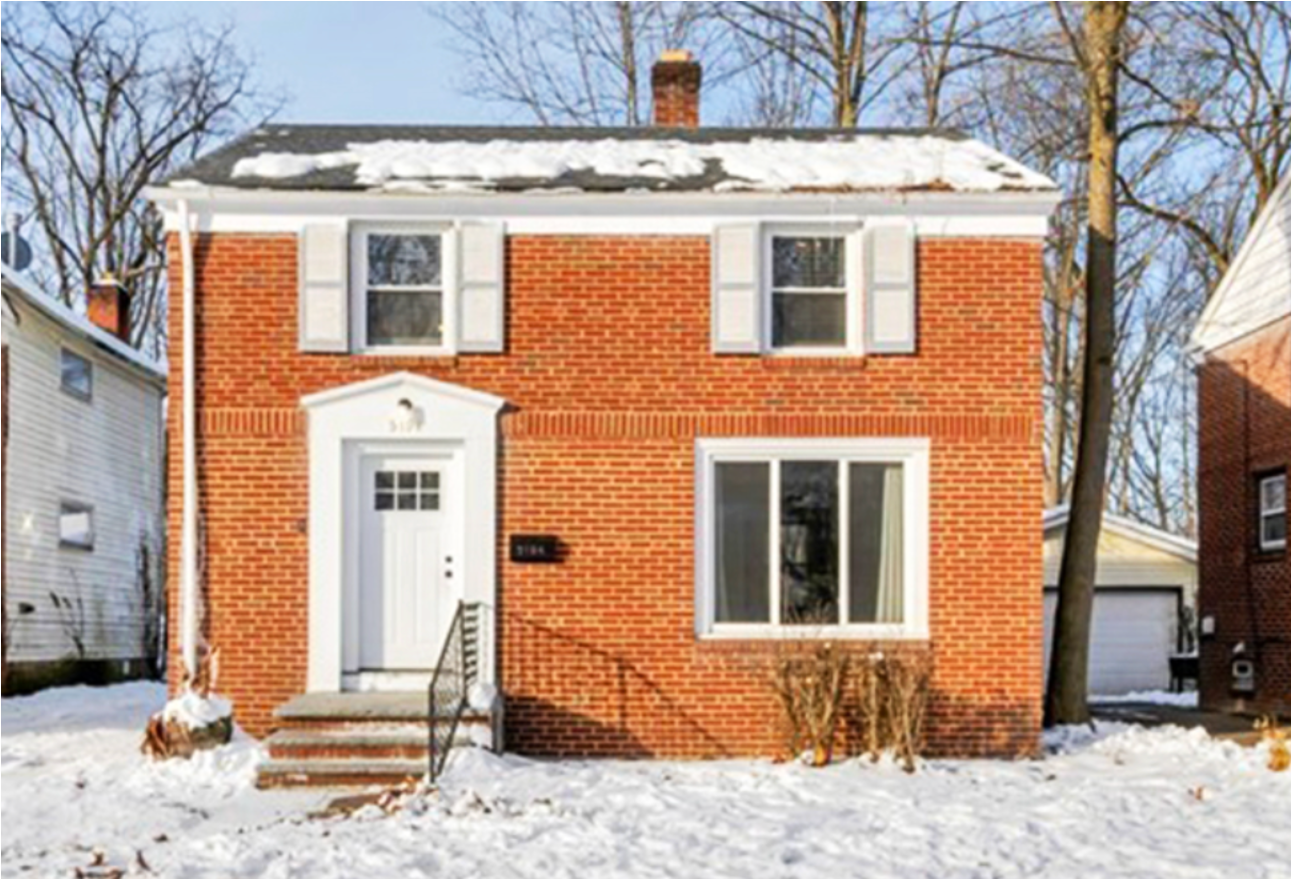
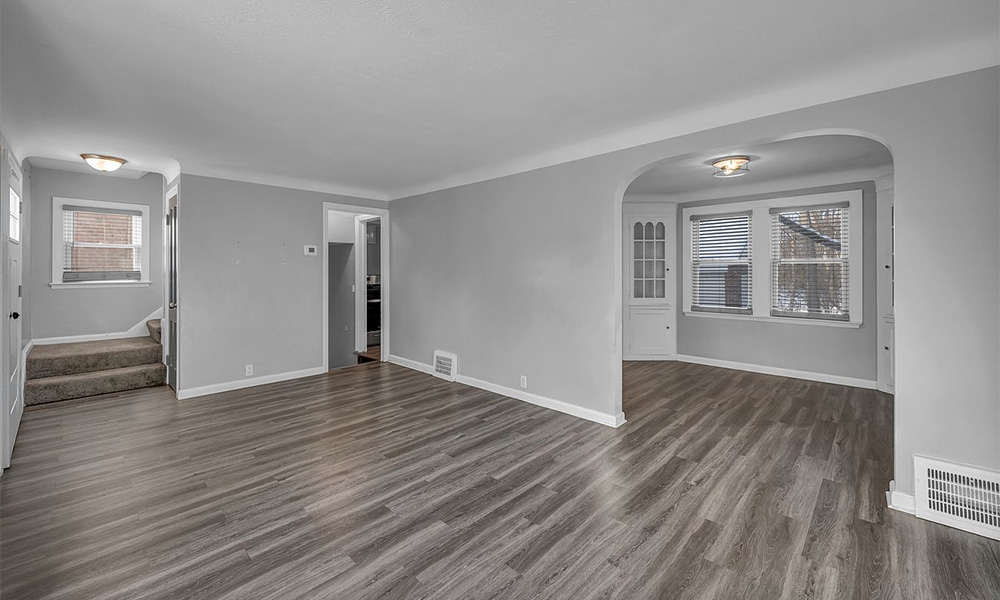
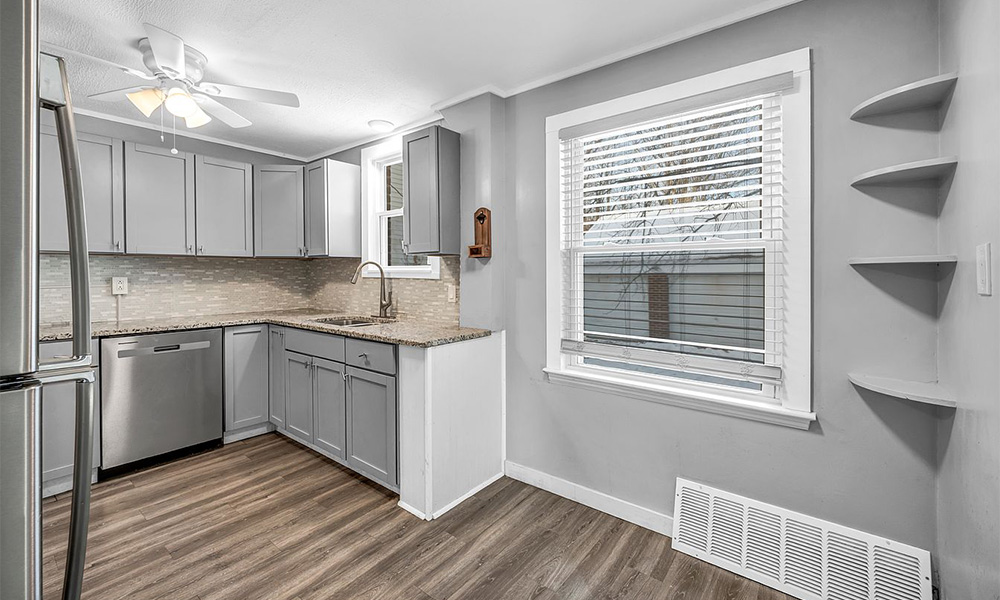
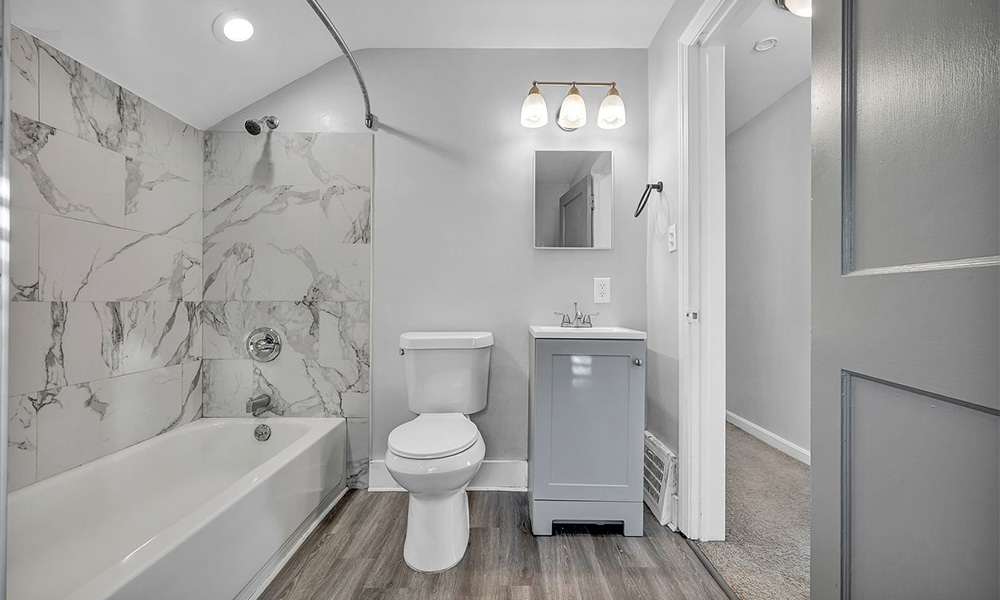
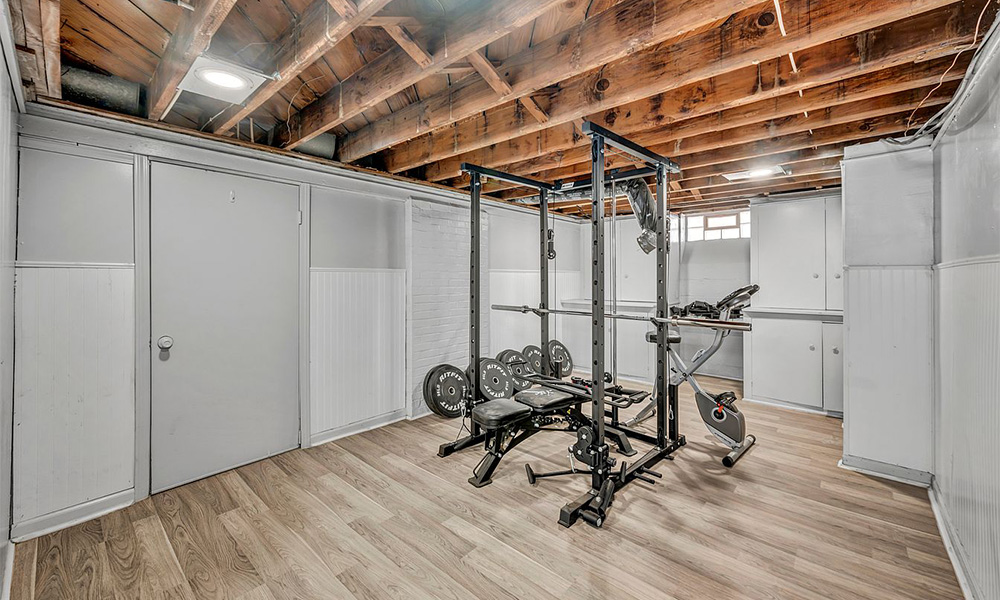
Refurbished single-family home · rental + refurbishment strategy · 4-year hold
*Forecasts are estimates and are not a reliable indicator of performance. Targeted returns are subject to the performance of each individual property. Projections, not guarantees. Capital is at risk.
This article is for informational purposes only and does not constitute investment advice. Fractional investments are held for a fixed term, and private resale via the platform may be possible but is not guaranteed. Rental income depends on occupancy, and appreciation depends on market conditions at exit. Targeted returns are not promises: actual returns for exited properties were 8.42% as of Q1 2026. Past performance is not a reliable indicator of future results. Capital is at risk.
Click here for detailed information about the risks of real estate investment
Investing carries risks, including loss of capital and illiquidity. Please read our Risk Warning before investing.