Ohio
Cleveland, Ohio, is often hailed as a quintessential slice of middle America—a place some believe has been left behind in the modern era. However, this sentiment couldn’t be further from the truth. Cleveland has continually reinvented itself, evolving from a crucial industrial powerhouse to a diverse and vibrant city with a growing economy and a rich tapestry of history and culture. From the early days of America, Cleveland welcomed waves of immigrants, who played a pivotal role in shaping its character and fueling its growth.
The city was an essential center for abolitionist activity, earning the codename "Station Hope" as part of the Underground Railroad. Cleveland’s strategic role in the Civil War further cemented its place in American history, as did its massive contribution to the Allied effort during WWII through its substantial industrial output. These periods marked Cleveland as a representation of the hardworking, resilient spirit of the average American.
Today, Cleveland is embracing a new era by expanding and diversifying its economy. Once a cornerstone of American industry, it now balances its manufacturing roots with thriving sectors in healthcare, education, and technology, positioning itself as a forward-thinking city that respects its heritage while looking to the future.
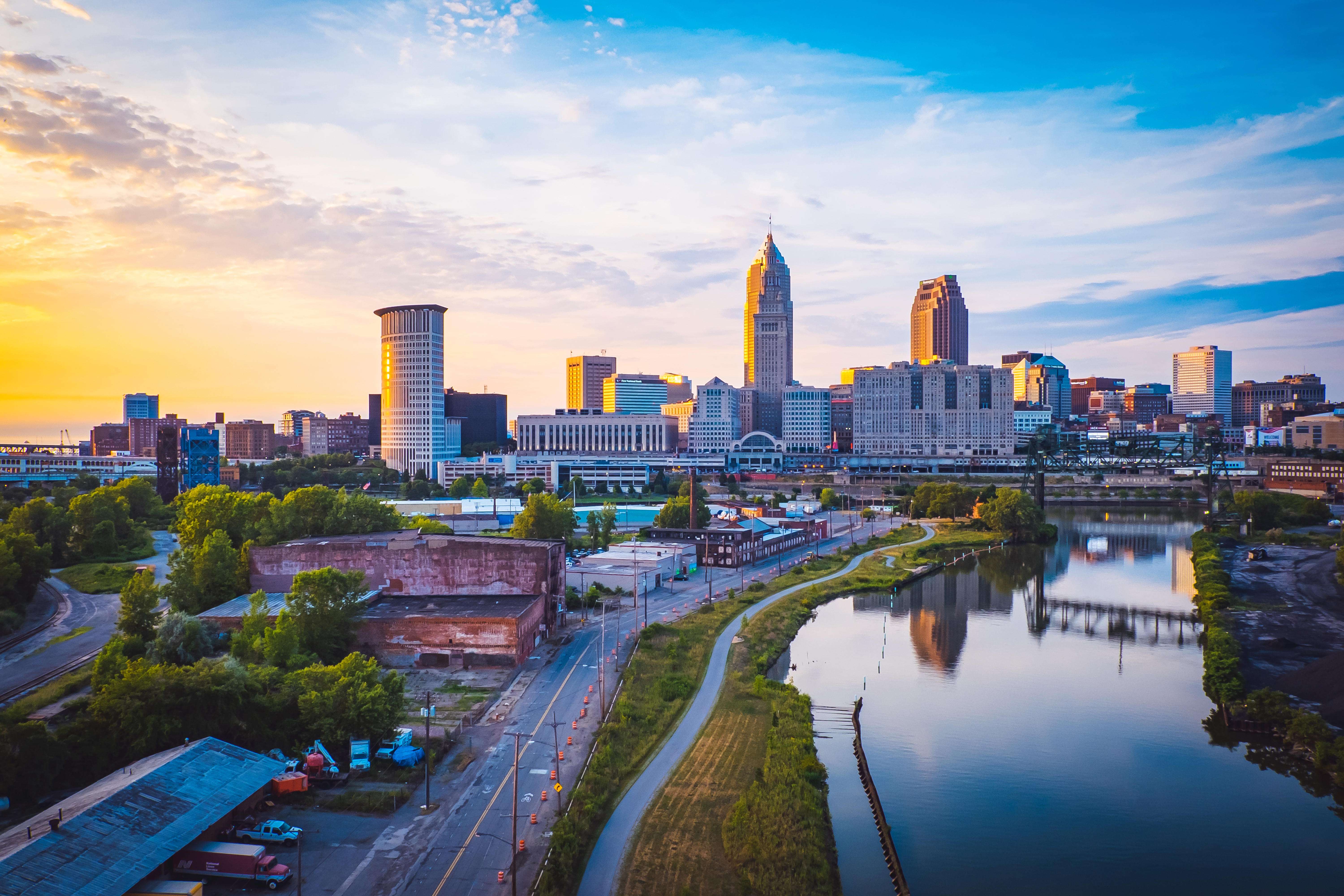
1. Cleveland became the first city in the world to be lit electrically in 1879, marking a milestone in technological innovation.
2. In 1891, John William Lambert developed the first gasoline-powered American automobile in Ohio City, paving the way for the modern automotive industry.
3. Cleveland also led the way in traffic management by being the first city to use an electric traffic signal in 1914, revolutionizing urban infrastructure.
4. Superman, one of the most iconic superheroes, was created in 1933 by Cleveland high school students Jerry Siegel and Joe Shuster, showcasing the city's role in pop culture history.
5. In 1936, Jesse Owens, a Cleveland resident and student at The Ohio State University, achieved global recognition by winning four gold medals at the Berlin Olympics, challenging racial prejudices of the time.
6. John F. Kennedy, in 1960, was the last U.S. President to be elected without winning Ohio, underlining the state's importance in presidential elections.
7. The Justice Center’s police headquarters opened in 1976 with a peculiar oversight—no light switches were installed, leaving the lights perpetually on since its inauguration, a mystery that remains unsolved.
Cleveland, Ohio, stands as a defining symbol of middle America, a city whose rich history and cultural depth reflect the nation’s journey. Known as one of the "Big Cs" along with Columbus and Cincinnati, Cleveland has earned the moniker "City of Champions" for its sports legacy and "Station Hope" for its pivotal role in the Underground Railroad. Named after its founder, General Moses Cleaveland, this city has continually evolved, from a manufacturing giant to a modern, multifaceted urban center with thriving arts, healthcare, and technological sectors.
Founded on July 22, 1796, Cleveland was established on the southern shore of Lake Erie by a survey party led by General Moses Cleaveland. A myth persists that the city’s name was shortened by a newspaper to fit the Cleveland Advertiser’s masthead, resulting in the familiar spelling we use today. Cleveland's growth surged with its location as a strategic post in the War of 1812, supplying military resources during the conflict with Great Britain. However, its development truly accelerated in 1832 with the completion of the Ohio and Erie Canal, which connected the Great Lakes to the Ohio River, opening lucrative trade routes and attracting businesses, residents, and immigrants to the city.
In 1836, Cleveland was formally incorporated, largely through the efforts of John W. Wiley, a lawyer who would later serve as the city’s mayor. Wiley’s construction of the Columbus Street Bridge became a focal point in Cleveland’s early history, as the bridge diverted trade away from Ohio City (OC), Cleveland’s neighboring settlement. The tension escalated into a physical confrontation on the bridge, which resulted in injuries and a fierce rivalry. Ultimately, peace was achieved, and OC was annexed, today standing as one of Cleveland’s oldest neighborhoods.
By the Civil War, Cleveland had established itself as a bastion of abolitionism, becoming a key stop on the Underground Railroad. Known as one of North America's most anti-slavery cities, alongside Boston and Toronto, Cleveland was pivotal in helping enslaved African Americans escape to freedom in Canada. The city’s industries flourished as demand for war materials soared, fueling economic growth and uniting Republicans and War Democrats in support of the Union cause. The post-war era marked Cleveland as a center of labor activism, where successful strikes significantly improved working conditions, setting precedents for labor rights.
Entering the 20th century, Cleveland’s booming industries earned it the nickname "Sixth City," as it ranked among the largest urban centers in the United States. Immigrants arrived in large numbers, driven by opportunities in the automotive and manufacturing sectors. The City Beautiful movement brought grand architectural and civic projects, and the city’s retail industry flourished during the Roaring Twenties. Innovations like the "speed nut," invented in Cleveland, boosted its automotive industry. However, Prohibition led to a rise in organized crime, as Cleveland, once a leader in the Temperance Movement, saw a proliferation of speakeasies. Following the Great Depression, the police force underwent significant reforms to combat corruption and restore public order.
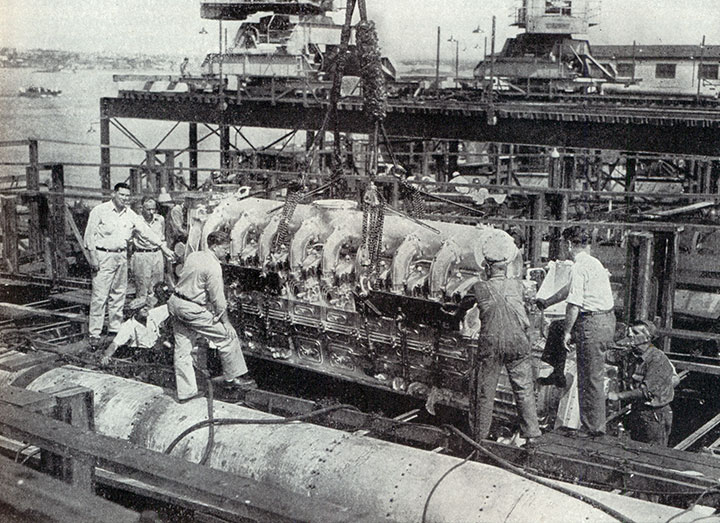 The Second World War catalyzed a new period of prosperity as Cleveland became a major producer of military goods, supporting Allied efforts and spurring local economic growth. The post-war era brought significant infrastructure developments, including highways, an airport, and the Erieview Urban Renewal Plan, positioning Cleveland as a model of urban modernization. During the 1940s and 50s, the city’s sports teams dominated, giving Cleveland the title of "City of Champions." In 1967, Carl B. Stokes was elected the first African American mayor of a major U.S. city, marking a political milestone, and in 1977, Dennis J. Kucinich became the youngest mayor of a major U.S. city at 31.
By the 1980s and 90s, Cleveland had transformed from an industrial hub to a diverse economy known for its advancements in healthcare, education, and the arts. Today, Cleveland’s rich historical heritage is balanced with its progressive present, making it a city that reflects both the history and the future of America.
Cleveland is a diverse city with a 2022 population of 370,365, reflecting its position as one of the key urban centres in Ohio. The city’s economic landscape is characterized by its resilience and adaptability. Despite historical challenges, Cleveland continues to thrive, thanks to its diverse economic base and strategic location in the Midwest.
The median household income in 2022 was USD 37,271, with 22.1% of the population holding a bachelor’s degree or higher. This mix of education and economic potential underscores the city's ongoing efforts to attract talent and investment.
The Cleveland Metropolitan Area, an economic powerhouse in its own right, boasted a GDP of USD 138.26 billion in 2022. To put this into perspective, this is higher than the GDP of entire nations like Morocco and Luxembourg and double that of Uruguay. Furthermore, the metropolitan area contributes a remarkable 20% of Ohio's total GDP, underscoring Cleveland's critical role in the state's economy.
The city’s economy is deeply rooted in its healthcare industry, which serves as its largest employer, with 19.9% of the population employed in the sector. This dominance is supported by Cleveland’s world-class hospitals and medical research institutions, cementing its reputation as a hub for healthcare innovation. The manufacturing industry, particularly packaging and vinyl (plastics), follows closely, employing 12.1% of the population.
This economic clout, coupled with its diversified employment sectors, positions Cleveland as a city with substantial growth potential and a thriving metropolitan hub in the heart of America.
Renowned for its love of sports, Cleveland’s sports culture is legendary in Ohio and across the nation. In the late 1940s and throughout the 1950s, the city dominated sports, earning it the title "City of Champions" with significant success in baseball, American football, hockey, boxing, and track and field. Today, Cleveland is home to the Guardians (MLB), Cavaliers (NBA), Browns (NFL), and the recently established Cleveland Pro Soccer (MLS Next Pro), which is poised to rival the biggest team in the state, Columbus Crew (MLS).
Cleveland has cultivated a vibrant arts scene that spans everything from renowned museums and historic theaters to local galleries and performance spaces. Many of the city’s cultural institutions are rooted in the early 20th century’s City Beautiful movement, which aimed to create inspiring public spaces. Today, Cleveland’s commitment to the arts is evident in its ongoing support for both traditional and contemporary art forms, making it a central hub for creative expression in the Midwest.

Cleveland has long been at the forefront of medical innovation, primarily through the groundbreaking work done at the Cleveland Clinic. This renowned medical center has been instrumental in advancing healthcare with numerous significant contributions:
Through these advancements, Cleveland has established itself as a pioneer in medical science, leaving an indelible impact on healthcare worldwide and reinforcing its legacy as a city of innovation.
Cleveland’s architectural heritage is a blend of bold innovations, historical influences, and a continual evolution of style and design. Throughout its history, the city has been home to groundbreaking ideas, shaping the architectural landscape of not only the Midwest but the entire country. From early 19th-century master builders to 20th-century visionaries, Cleveland's architecture showcases a unique balance between traditional elegance and forward-thinking modernism.
In the early 1800s, Cleveland’s architecture was shaped by the building needs of a growing industrial city. The city’s first architects, such as Jonathan Goldsmith and Charles W. Heard, introduced significant styles like Federal and Greek Revival, alongside Romanesque influences in their public buildings. The impact of Cleveland’s early architects can still be seen in notable structures like the Old Stone Church, which stands as a testament to the era's distinctive design.
As Cleveland expanded during the 19th century, the city became a center for architectural experimentation. By the late 1800s, Euclid Avenue had transformed into "Millionaires Row," a display of grand mansions that defined the wealth and opulence of Cleveland's elite. These homes, designed by both local and national architects, included a mix of Greek Revival, Gothic Revival, and Victorian styles, reflecting the city’s growing importance and global connections. Unfortunately, much of this architectural splendor was lost in the post-World War II era, as economic shifts and urban redevelopment led to the demolition of many of these iconic homes.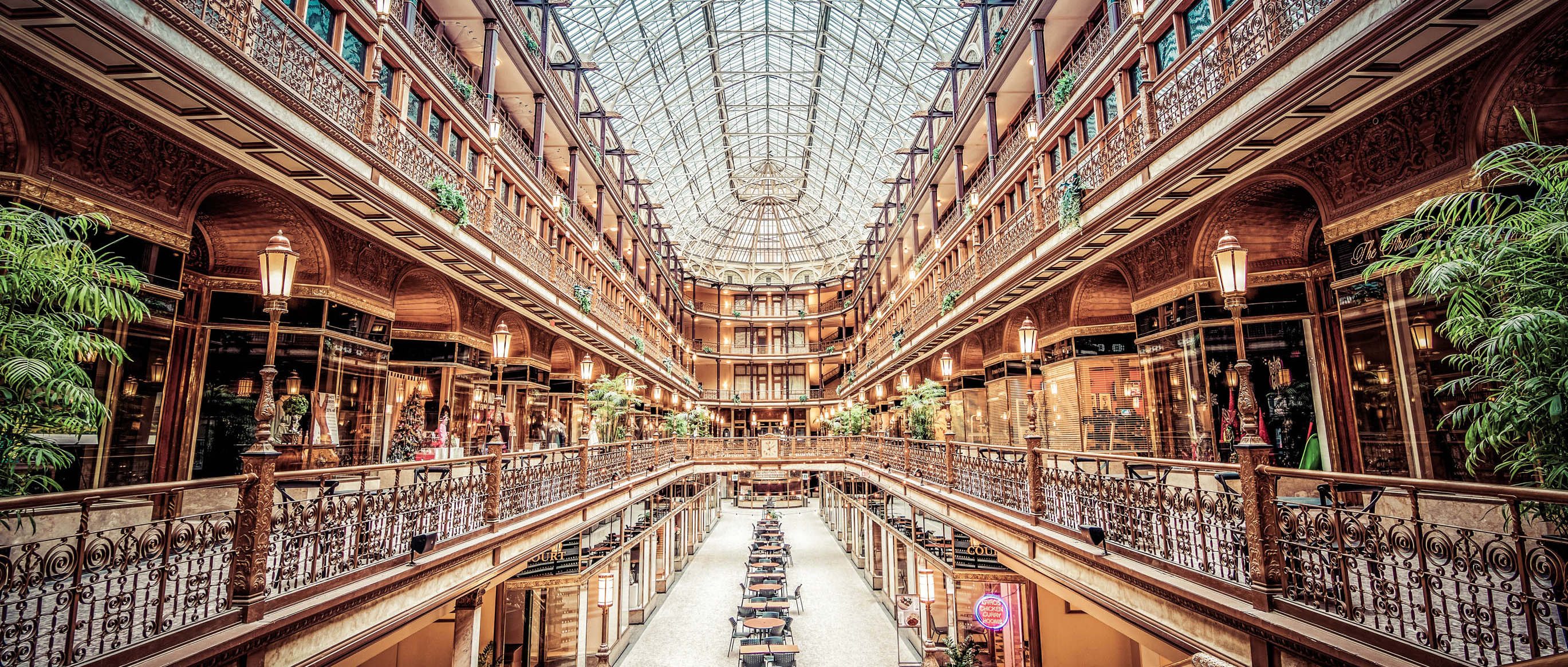 Cleveland's architectural innovation reached new heights in the 20th century. The Group Plan of 1903, which redesigned the city’s central district, set a national example for urban planning. The creation of a monumental civic center, anchored by the Cleveland Public Library, City Hall, and the Cuyahoga County Courthouse, showcased a commitment to Beaux-Arts classical design and laid the foundation for the city’s modern civic identity. This ambitious project signified Cleveland’s position as a progressive and forward-thinking city, and its influence can still be seen in the city’s modern layout and landmarks.
The 1920s and 1930s marked a new era of architectural development, with the construction of buildings like the Cleveland Union Terminal (now the Terminal Tower), which epitomized the city’s commercial ambition. Standing as a beacon of Cleveland’s economic strength, this Beaux-Arts structure once held the title of the second-tallest building in the world. Alongside these monumental buildings, the city also embraced suburban development, with the planned communities of Shaker Heights becoming a model of the garden city ideal. Shaker Heights featured curving streets, diverse residential designs, and an integration of green space that emphasized the city’s commitment to livability and aesthetic harmony.
In the mid-20th century, Cleveland, like many other cities, began to embrace modernism. The International Style gained prominence, particularly in public housing projects like the Lakeview Terrace Apartments, designed by Weinberg, Conrad & Teare. These buildings, known for their simplicity and functional design, represented a break from the ornate styles of the past and reflected a more utilitarian approach to architecture that would shape the city’s skyline for decades.
Today, Cleveland continues to blend the old with the new, preserving its historical landmarks while welcoming cutting-edge designs. Iconic structures like the Rock and Roll Hall of Fame, designed by architect I. M. Pei, and the innovative Museum of Contemporary Art demonstrate Cleveland’s ongoing commitment to architectural excellence. As the city continues to evolve, its architecture remains a reflection of both its industrial roots and its ambitions for the future, making Cleveland an enduring testament to the transformative power of architecture in shaping urban identity.
Cleveland's residential real estate market has produced some of the most striking appreciation numbers of any major U.S. metro in recent years, while maintaining the lowest entry prices and highest gross rental yields in its peer group. Zillow's data identified Cleveland as the highest-appreciating metro among the 50 largest U.S. markets in 2025, with average home values growing 4.5% year-over-year as of October 2025. The S&P/Case-Shiller index confirmed Cleveland's strength, recording a 6.58% year-on-year increase as of March 2025 — third among the 20-city composite, behind only New York and Chicago, and ahead of every Sun Belt market tracked.
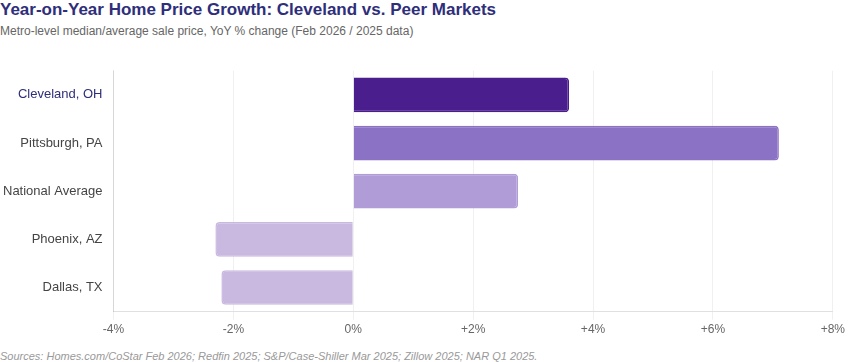
The most current data shows the Cleveland metro average sale price at $232,078 in February 2026, up 3.6% year-on-year. At city level, Redfin reported the median sale price at $125,000 in February 2026 — more than 40% below the U.S. median of $403,700. This combination of appreciating values and deeply affordable entry prices is structurally unusual and underpins the yield profile that distinguishes Cleveland from virtually every comparable market. City-level prices have moved materially over a short period: from approximately $110,000 in April 2023, to $132,000 by April 2024 — a 20% increase in 12 months — before moderating toward their current level.
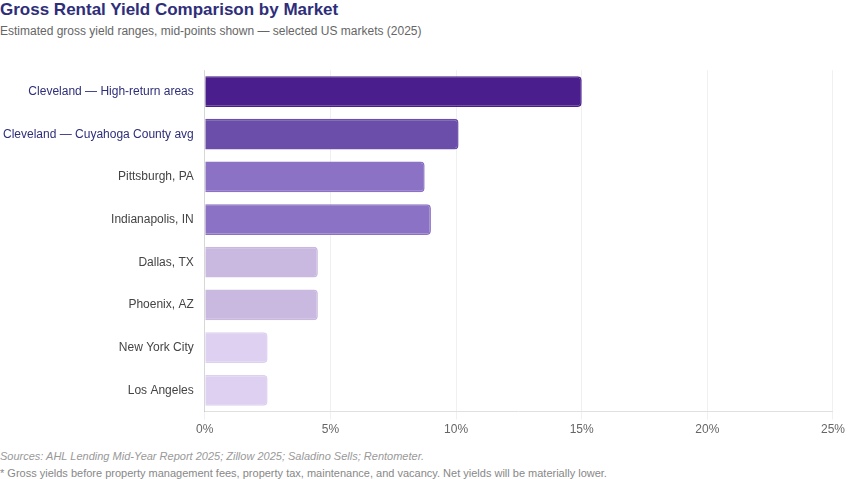
On rental income, Cuyahoga County recorded an average gross rental yield of 10.1% in Q1 2025, with individual assets ranging from approximately 9% to over 22% depending on purchase price, property type, and location. The Cleveland multifamily market ranked first among all major U.S. markets for rent performance in Q3 2024, and sixth in Q2 2024. Average rents across the city stand at $1,545 per month as of March 2026 — below the national average of $1,637 — which keeps rents accessible to a broad workforce and supports consistently low vacancy. Rental vacancy has declined as lease renewals have increased and competition for quality units has tightened.
The supply pipeline provides further structural support. New multifamily deliveries fell by an estimated 21% from approximately 2,500 units in 2023 to around 1,900 in 2024, with a further 30% decline projected for 2025. For single-family residential investment — the core asset class for crowdfunding investors — competition from build-to-rent developers is minimal. Cleveland's housing stock skews older, brick, and established, which limits new supply competition and reinforces the value of well-maintained existing stock.
For international investors, Cleveland offers USD-denominated exposure to a market with entry prices typically ranging from $80,000 to $350,000, gross yields of 9–22%, and an anchor-employer economy that has proven stable across multiple economic cycles. Homes in the city averaged 50 days on market as of February 2026, with the metro market running at 43 days — reflecting active buyer and investor demand. Several key Cleveland neighbourhoods, including Glenville, Slavic Village, and Detroit-Shoreway, are designated federal Opportunity Zones, offering additional capital gains tax incentives for qualifying investments.
Investing carries risks, including loss of capital and illiquidity. Please read our Risk Warning before investing.